
Leadership
 8 min read
Purpose and Intent: Leading Through the Fog of Innovation

“Bummer.”
The thought flickered through my mind as I watched the second element of our mission veer away toward a secondary landing zone. The plan had already gone sideways. We were in a bit of a pickle and our landing zone was “hot,” which meant the school-bus-sized twin-rotor helicopters would not risk landing again. This was true even with two attack helicopters as escorts. The attack helicopter escorts, frankly, were a little busy doing exactly what attack helicopters do when landing zones are called “hot.”
It was the middle of the night. On a mountain in a place some labeled as foothills of the mountain range, although these mountains were not foothills by any stretch of the imagination. I was the Ground Force Commander for a “team of teams” comprising U.S.,Coalition, and Partner Security Forces. The mission’s success sat on my team’s shoulders, but mission failure was mine alone to bear.
We had just landed on a mountainside as the first element of a multi-element insertion. The plan was simple: land, link up with other security force elements that had been in the area, move into the valley together, and begin clearing operations at dawn. The reality, on the ground, was a mess. I had to neutralize an immediate threat that the intelligence team reported was not supposed to be there, find a medevac landing zone for my injured interpreter, and somehow link up with the rest of my force that were now several kilometers away at the secondary landing zone, which was on another mountain. All of this had to happen while coordinating with a 100+ member partner security force, but now, through a single remaining interpreter. No big deal.
Thriving in chaos isn’t about perfection or following a well planned script; thriving in chaos is about understanding purpose and intent. Ultimately, we completed the mission. We cleared the valley and took the objective. The mission was considered a success. But the “plan” was dead on arrival on that mountain when the first round zing’d by us. The intelligence was wrong, our planned logistics missed our aerial resupply drops, and we ended up spending that week rucking 100-pound packs over rugged, contested, mountainous terrain with limited water and other critical supplies.
From the Mountains to the Open Office
Believe it or not, this experience is more universal than it sounds. Whether you’re an Army Officer or a Tech Lead, we’ve all experienced these types of conditions in our work place. A project falls behind, a last-minute scope change hits an audit, or “shadow IT” emerges to turn a small issue into a significant risk.
I’ve been at Artera for nearly two years as part of the TechOps team within our Innovation Organization (iO). Innovation moves at a pace that feels remarkably like that mountainside in the middle of the night: scary, thrilling, and full of obstacles that are often opportunities in hiding.
As an Army Officer, my mission planning focused on identifying the most likely course of action based on the uncertainty that came from analyzing the terrain, intelligence reports, and human factors. Today, as a leader in Security and Technology, planning for uncertainty comes from analyzing emerging threat tactics, understanding the business’s needs, and incorporating the incredible speed of evolution of AI. With AI, security controls, documentation, policies, and playbooks do not stay current for long. The environment changes whether we are ready for it or not.
The Security Trade-off
Leading security in an innovation-first company requires a shift in leadership soft skills and mindset. In the large global enterprises I worked in after the military, risk and uncertainty was something to be avoided or controlled at all costs. But that “perfect control” seemed to always cost those large global enterprises its speed.
In the Army, I learned that there is a constant trade-off between speed and security. Choosing one over the other does not necessarily increase risk; the choice just changes the type of risk you face.
At Artera, our goal is not to slow things down. It is to understand intent. What are we building and Why? Once we know the “why,” the Security team can help our teammates move forward safely and securely, even when the path is not defined.
Leading in the Age of AI
AI has amplified this dynamic. New tools appear faster than most organization’s governance frameworks can adapt. It would be easy to respond by locking everything down. Saying “no” to everyone about anything AI. But a “command and control” leadership style does not work in an environment built on intent and trust. Instead of being a bottleneck, the role of Security is to provide clarity and guardrails.
To lead through uncertainty in any organization, I have leaned on three military principles:
1. From Perfect Plans to Clear Purpose and Intent
Plans matter, but intent matters more. When things change, teams can still move forward if they understand the objective of what we are doing. Instead of trying to control every step, we focus on understanding the “why,” which for Artera Security, includes protecting customer trust and enabling innovation without slowing progress. When intent is clear, teams make better decisions even when documentation and policies evolve alongside the technology.
2. From Centralized Control to Distributed Trust
Waiting for guidance from “Higher Headquarters” is rarely an option in a crisis. On that mountain side, in the middle of the night, my boss was not coming to save me and I knew that. My boss was fighting his own battles, and he trusted me to lead my teams through our battles. My take from those experiences is that innovation is not centralized; innovation is happening everywhere, all at once, across our Engineering, Product and even our HR teams. If Security tries to be the sole gatekeeper to control uncertainty or remove all the risks, we lose visibility and become the roadblock. To promote trust, Artera invests in implementing technical controls, governance guardrails, education & awareness, and shared accountability so teams can continue moving with reasonable speed.
3. From Preventing Failure to Building Resilience
Success does not come from preventing mistakes; success comes from building teams and systems that can recover quickly when things do not go according to plan. With AI, operating in an uncertain environment is the new normal. Rather than chasing a “perfect” state of control, at Artera, the focus for Security is on visibility and communication. This ensures we have the agility to adjust course the moment a new risk emerges.
Purpose and Intent
When I think back to those mountains and valleys I spent so much time in, I do not just remember the chaos. I remember the clarity of purpose. Nobody waited for perfect information. We adapted because we knew what success looked like. We knew the “why” of what we were doing.
At Artera, the goal of Security is not to create an environment where nothing ever goes wrong. My goal is to build a team that can operate confidently when things go sideways. While I am no longer stepping off helicopters, the purpose remains the same: protect and cultivate customer trust, enable innovation, and provide the organization with options they need to move forward. This holds true even when the path looks nothing like the one we planned.
Artera is the proven agentic healthcare company, leveraging a decade of deep expertise to support 2 billion patient communications annually. Our solutions empower humans and AI Agents to work together to fix patient communications across text, phone, and web, unifying the entire patient journey – from scheduling and intake to billing and more. Trusted by over 1,000 healthcare organizations (including specialty groups, FQHCs, large IDNs, and federal agencies), Artera directly increases staff efficiency, boosts patient engagement, and improves the provider bottom line, helping patients get the care they need with simplicity and speed.
2B+ Annual Comms. | 200M+ Patients | 10yrs Experience | FedRAMP High in Process | www.artera.io |
Founded in 2015 and based in Santa Barbara, California, Artera has earned industry recognition for its rapid growth and workplace excellence. The company has been named a Deloitte Technology Fast 500 company for five consecutive years, ranked on the Inc. 5000 list of fastest-growing private companies for six years, and recognized as a BuiltIn Best Company to Work for six years in a row. Artera has also been honored by Forbes as one of “America’s Best Startup Employers,” featured in Newsweek’s “World’s Best Digital Health Companies,” and recognized by Business Insider as one of the top “44 Startups to Bet Your Career on in 2024.
For more information, visit www.artera.io.
Disclaimer: This post reflects personal leadership insights and the evolving security landscape at Artera. It is provided for informational purposes and does not constitute legal or regulatory advice. While we strive for accuracy, the world of technology and security moves fast, please consult with your own experts for specific compliance needs.


How AI is helping to improve patient care in the healthcare industry
This is a repost from CareMinds, which features a podcast with Ashu Agte, the CTO at Artera, about how AI…
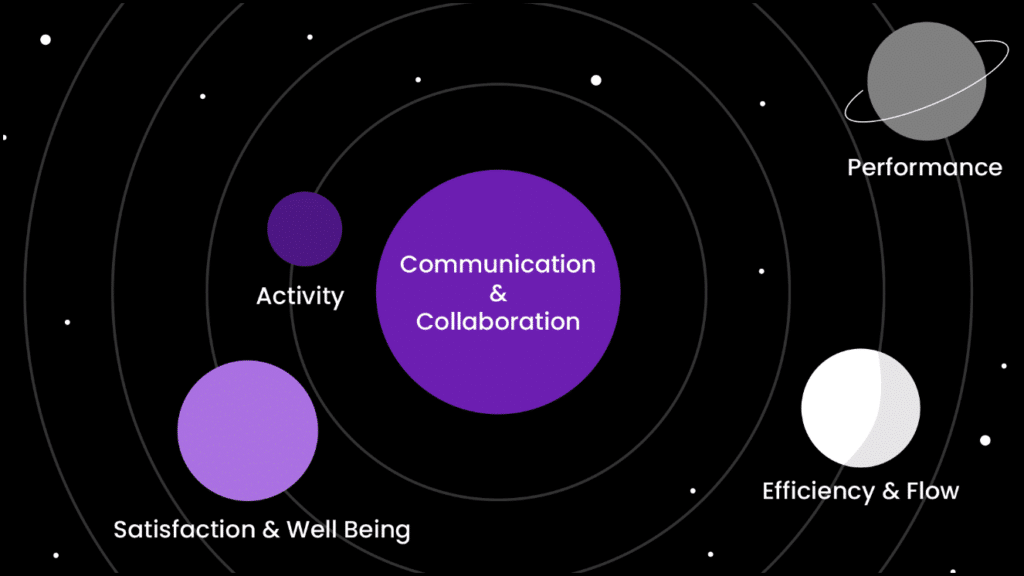
SPACE: An Engineering Productivity Framework Focused on the Human Elements
Engineering organizations often look for ways to measure productivity and velocity, but it isn’t always easy to find the right…
Inheriting an Organization and Its Transformation
In this episode, Amir Bormand talks with Ashu Agte, the CTO at Artera, about dealing with an exit and its impact on organizational transformation and design. Artera is a messaging platform for health systems that aims to improve patient experience and satisfaction. Ashu shares his experience and insights on the responsibilities of an engineering leader, organizational restructuring, and the challenges of managing a team during an exit. He also highlights the importance of communication and transparency in the process.